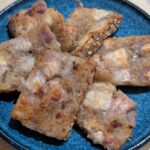

Made garlic naan for two reasons:
- I need to get rid of self-rising flour :p
- I am making chicken tikka masala for dinner, so might as well try this to go with that!
No yeast? Use self rising flour!
No tawa or tandoor? Cast iron pan will save the day. It’s hot enough and maintain the temperature for a while; non-sticky pan temperature could fluctuate faster.
Having make pasta dough with flour and egg, chinese noodle dough with flour and water, I am surprised to learn that Indian naan dough use flour and yogurt; yogurt instead of milk or egg or just water!
Why is yogurt used so much in Indian food? From marinating meat, to add in dishes’ cooking, to mix with flour for dough.. This post explained why Indian loves yogurt so much:
- “Most Indians are vegetarian, and whole-milk yogurt (the only kind Indians eat, by the way, because it’s delicious) contains the protein, calcium and fat they need.”
- “It’s a great curry-thickener.”
- “Soothing”
What do you think??
TAKEAWAYS
- Dough resting takes 3-4 hours, make sure you have enough time!
- Dough should be sticky and semi-soft. Can add warm water to make it sticky and wet 🙂
- After resting, dough is stretchy and can easily bounce back when rolled out, just try to roll out more without breaking it
- Bottom side of naan should apply water generously; when hot cast iron met water on the bottom, bubbles will form
- When there is smoke coming out from pan, it means the bottom side’s water has evaporated and might be ready to flip
- Roll in a little salt with cilantro and garlic, melt some salt in butter, that should be salty enough. Plus, naan is usually served with other dishes and should not be too salty.
- Can continue baking naan if not cooked from pan-frying, 500F, 5mins after brushing butter on top to prevent being dried.
RECIPE
Step 1: Make the dough
- 2 cups of self-rising flour
- 1 tsp sugar
- 2 tbsp oil
- 1/2 cup plain yogurt, add some at a time, stir to help absorb
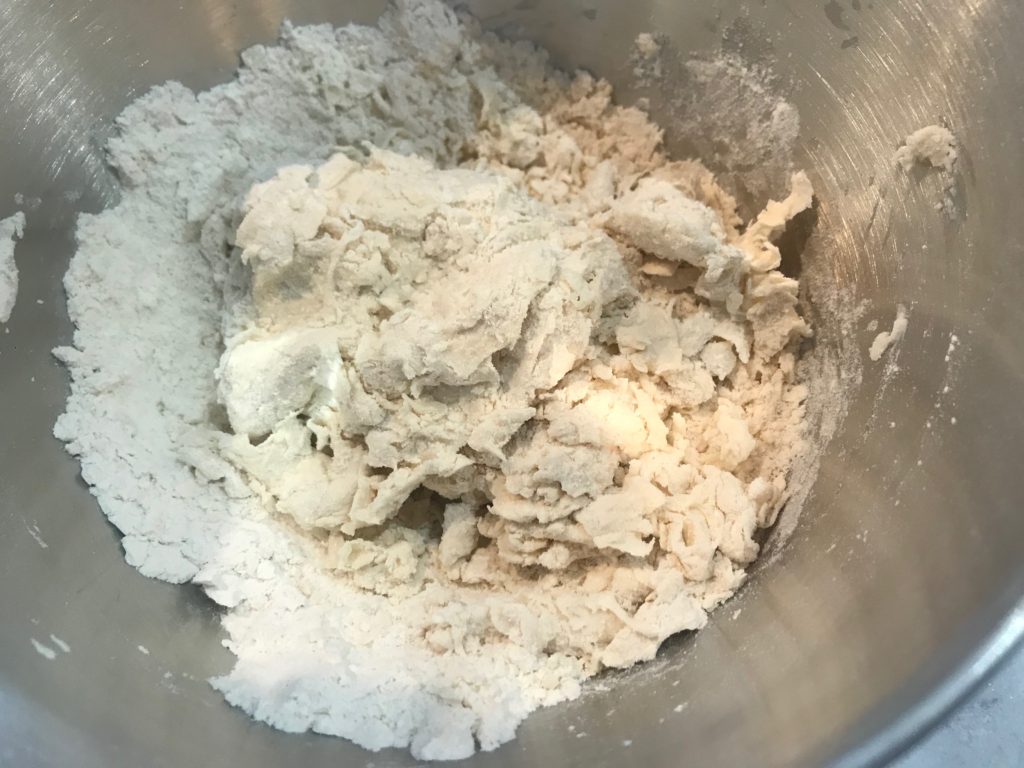
- + warm water as needed, to make a sticky, semi-soft dough
- this step is tricky. Originally I made a relatively drier dough with distinct gaps, but a few YouTube videos suggest to have a sticky, wet dough; so I add more warm water. The dough can absorb water pretty well and becomes smoother and can sticky better to each other
- I think when you can reshape the dough however you want, instead of having distinct, unable-to-stick-together gaps, it is good!
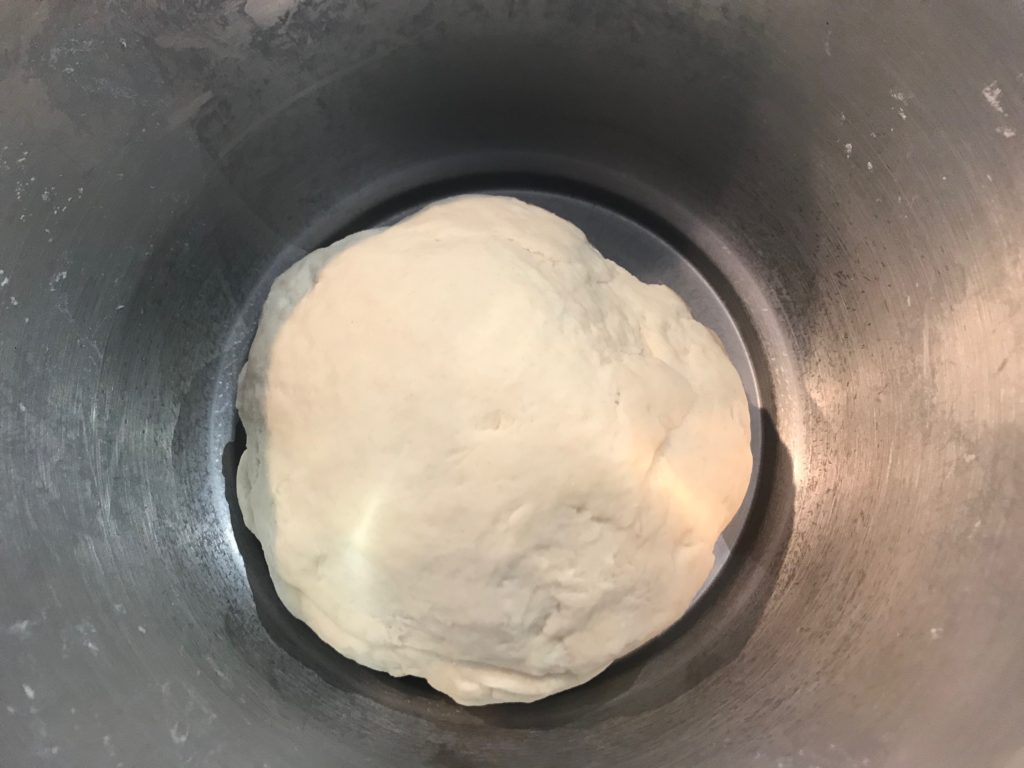
- when dough bounces back when pressed, it’s ready to rest!
- oil the surface with 1-2 tbsp oil
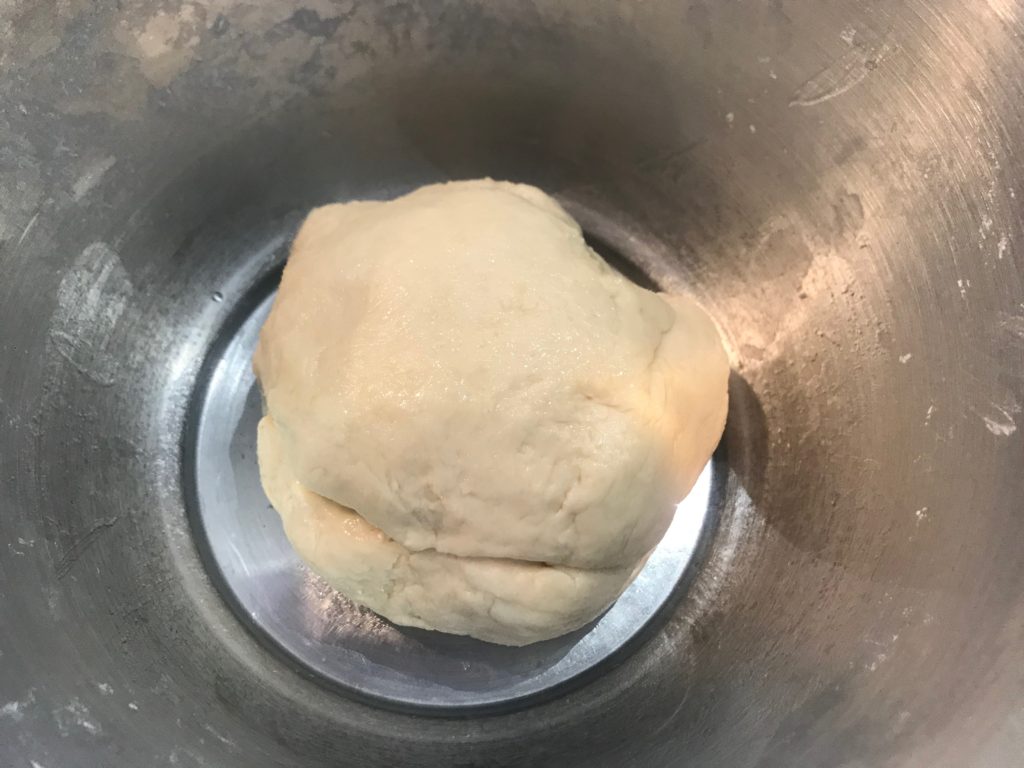
- rest 3-4 hours till rise 1.5 to 2 times of original size
Step 2: Roll out naan
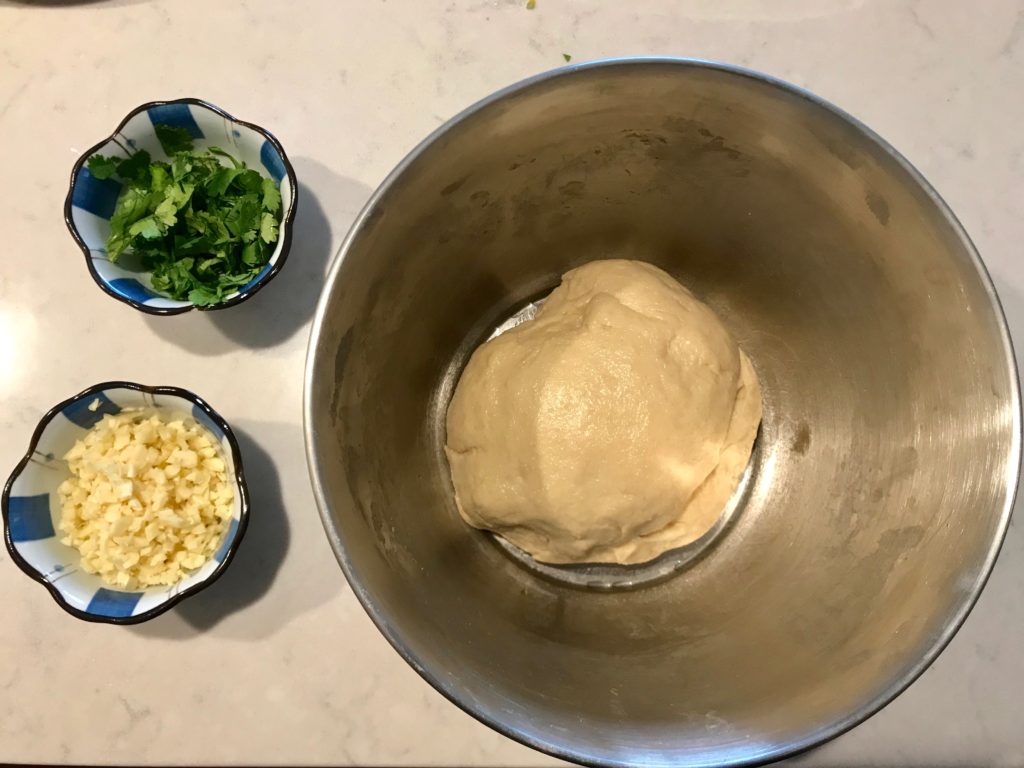
- roll out small ball of dough into oval shape
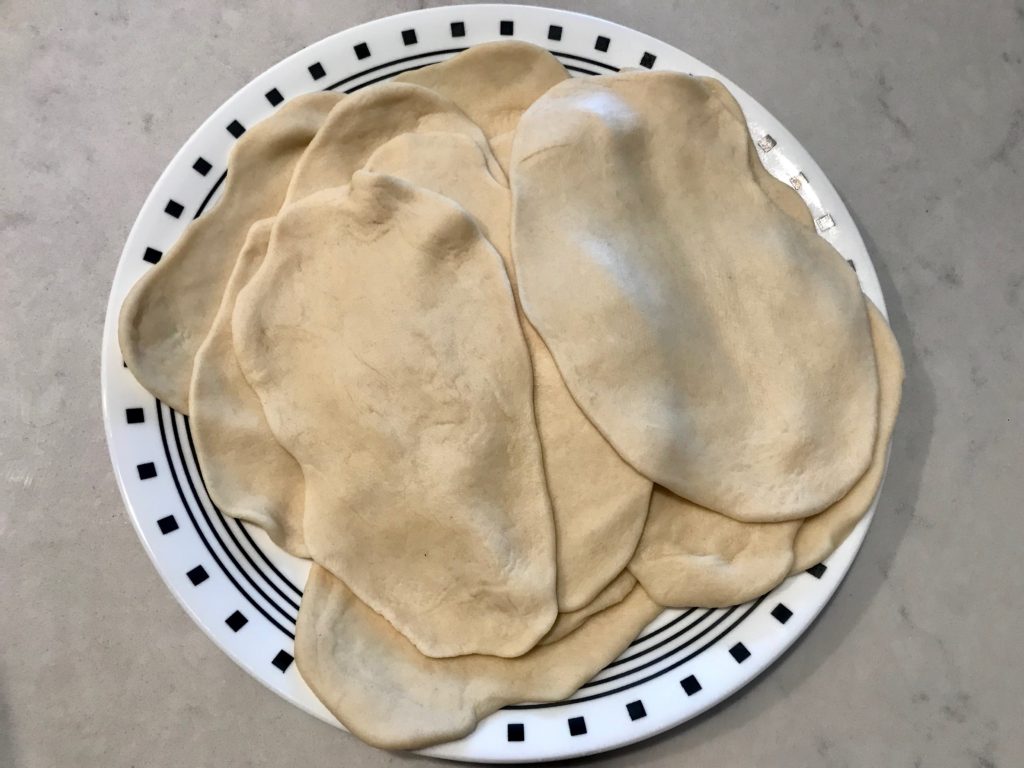
- sprinkle some salt on “top” side
- brush some water on top to help ingredients attached, put on cilantro, finely chopped garlic, onion seeds (I did not have it this time 🙁 ); gently roll over to press ingredients in naan.
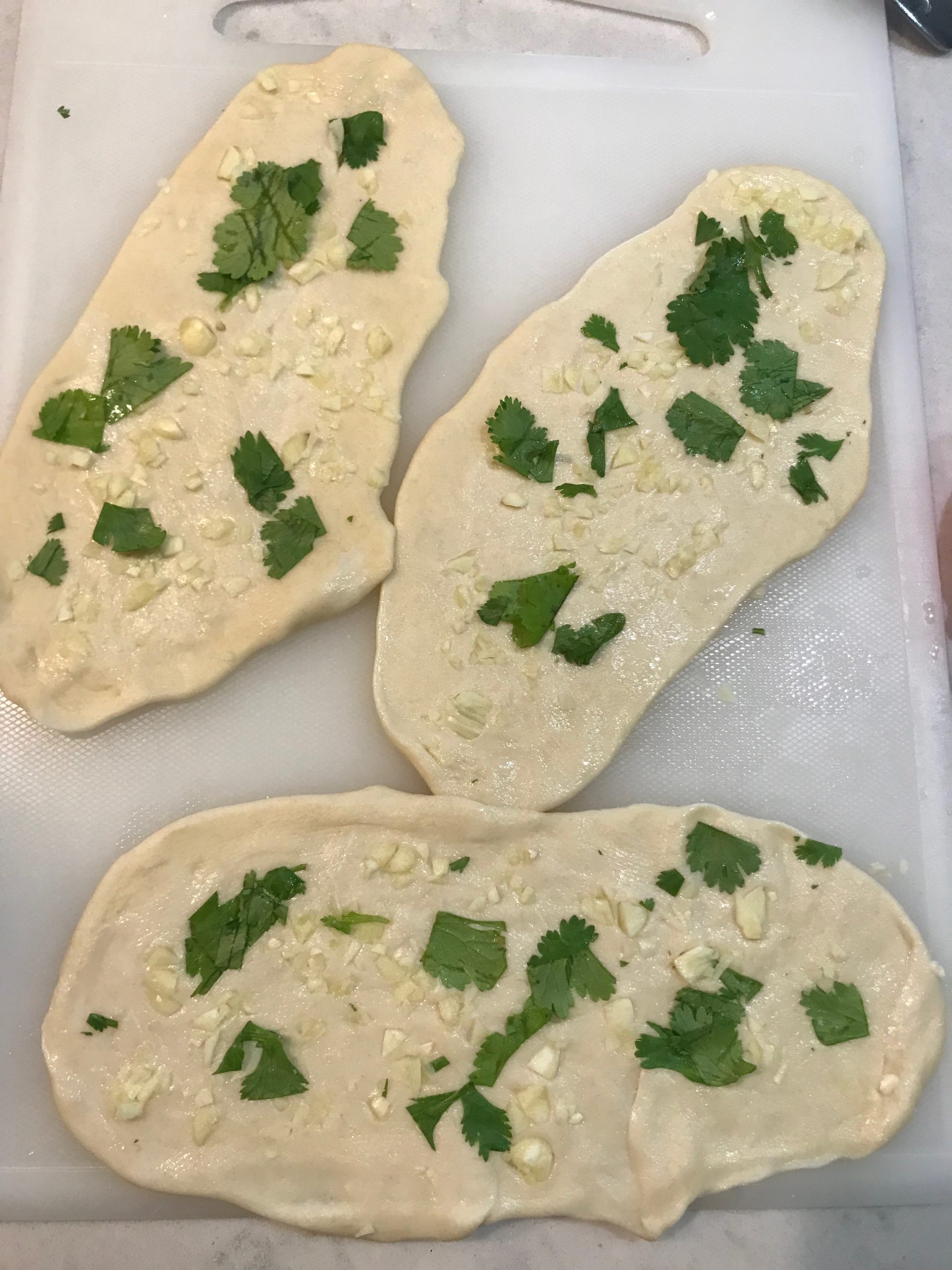
- melt 2 tbsp butter — microwave for 30secs
- + 1/2 tsp salt in melted butter, mix well
Step 3: Pan-frying on cast iron pan
- heat up cast iron pan to medium heat
- I tried medium-high, naan got bubble and browned very fast, without cooking dough completely
- **IMPORTANT** brush water GENEROUSLY on the bottom –> making air bubbles when add to HOT cast iron (~1mins)
- brush butter on top
- put naan on cast iron pan till there are bubbles popping up, and peek to see if bottom is browned (if there is white smoke, it’s usually ready as water has evaporated)
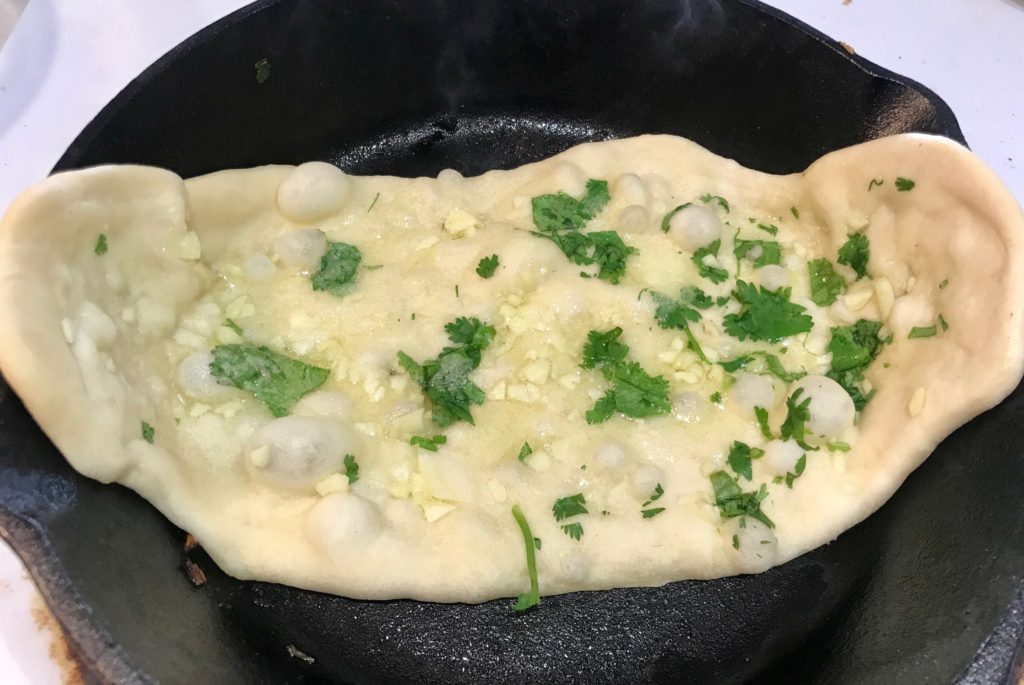
- quick flip naan to brown the top side and bubbles (~30secs)
- remove from pan, brush with butter if there is more
- If naan taste semi-cooked, brush with butter and put in 500F oven for 5mins; butter prevents naan from being dried out from high temperature

Resources
Followed Kanak’s Kitchen recipe:
- Substitute all-purpose flour, baking soda and salt with self-rising flour.