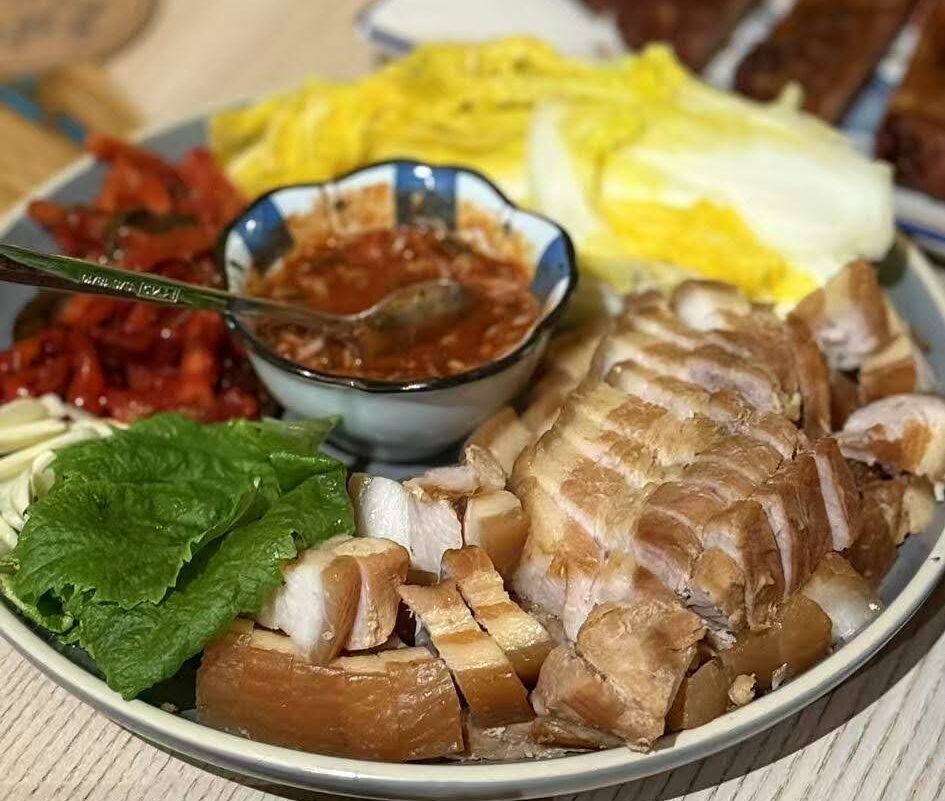
In the cold winter months, I always find myself craving bossam at Korean restaurants. But in the Bay Area, this dish often starts at $40 or more, which usually nudges me toward ordering something more affordable instead.
Turns out, bossam is much more straightforward to make at home than I expected. It does require a bit of prep as each component needs some attention, but once everything comes together, you and your guests are rewarded with a beautifully balanced, comforting, and seriously satisfying dish.
Ingredients
Pork Belly
- 3 lb pork belly
- 1 apple
- 1 onion
- 2 tbsp doenjang
- 1 tbsp brown sugar
- ~20 whole black peppercorns
- 3–5 bay leaves
- ~10 garlic cloves
- 4–5 slices ginger
- 1 packet instant coffee (optional, but helpful for removing porky odors)
Cabbage Wraps
- 0.5–1 lb inner (yellow) napa cabbage leaves
- 1/4 cup white vinegar
- 1/4 cup sugar
- 3/4 cup water
- 1 tbsp salt
Shrimp Sauce
- 1 tbsp shrimp paste (saeujeot)
- 1 tsp chopped scallions
- 1 tsp minced garlic
- 1 tsp Korean chili powder (gochugaru)
- 1 tsp sugar or monk fruit sweetener
- 2 tbsp pork belly broth
- 1 tsp toasted sesame seeds
Add-ons
- Radish kimchi
- Thinly sliced garlic
- Thinly sliced jalapeño (if you dare!)
- Shiso leaves
Instructions
- Step 1: Place the pork belly in cold water to help remove any porky odors/boar taint. Drain.
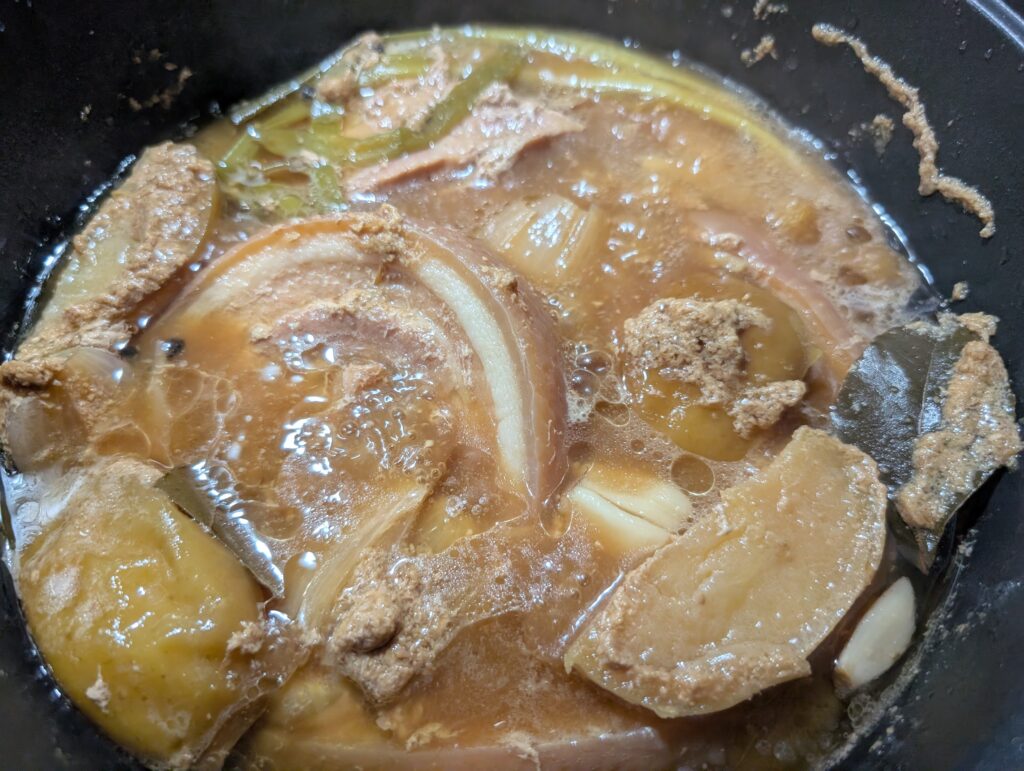
- Step 2: Add the pork belly, onion, apple, doenjang, brown sugar, garlic, ginger, bay leaves, black pepper, and instant coffee to a pot. Bring to a boil, then reduce to medium heat and simmer for 1 hour. Check for tenderness and continue cooking for another 10–15 minutes if needed.
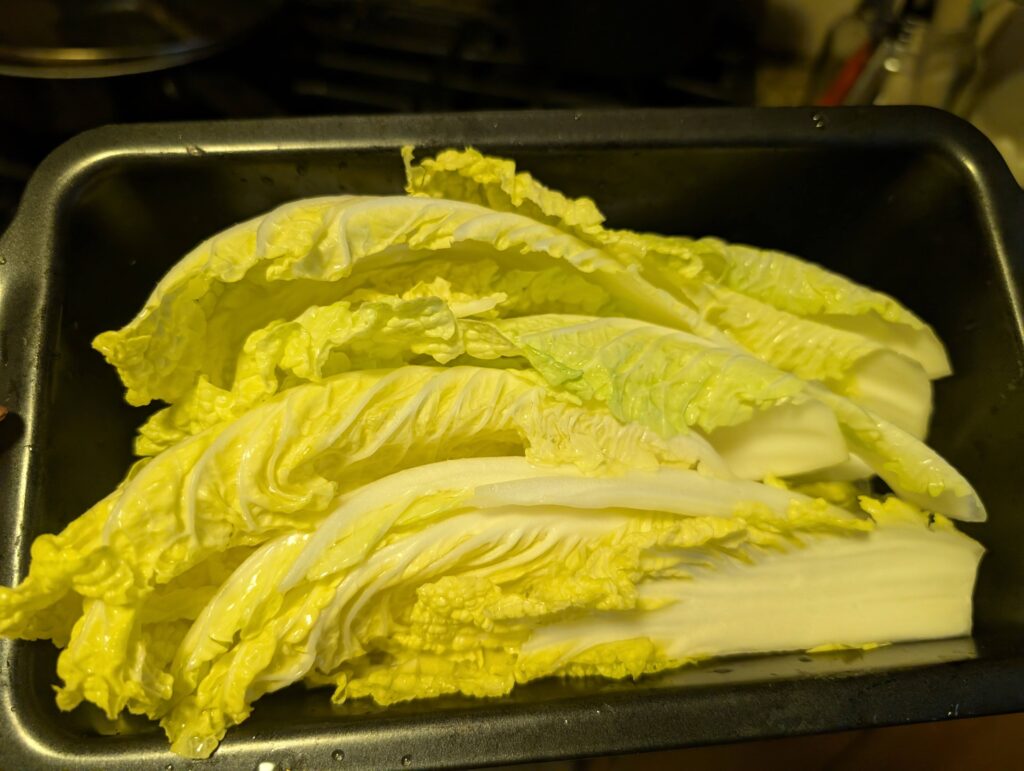
- Step 3: While the pork belly braises, prepare the cabbage wraps. Use the sweet, tender yellow inner leaves of napa cabbage. Mix vinegar, sugar, salt, and water, then submerge the cabbage in the pickling liquid. Toss every 15 minutes to ensure even pickling across. Let the cabbage pickle for 1–2 hours.
- Step 4: Usually the pork belly cools down in ~45mins. Cooling it too early can cause the fat to firm up after plating, which gives an unpleasant, lard-like texture. Can keep them in the broth before ready to cool down.
- (Optional) Step 5: After pickling, steam the cabbage for about 10 minutes, then let it cool to room temperature. While many recipes do not include this step, I personally prefer the softer, lightly cooked texture over a crunchier (read: raw
 ) bite.
 - Step 6: While the pork belly cools, make the shrimp sauce by mixing shrimp paste, scallions, garlic, sugar, chili powder, and pork broth until well combined. Sprinkle toasted sesame seeds on top.
- Step 7: Once the pork belly is just slightly warm, slice it neatly into 1 cm (about ½-inch) thick pieces.
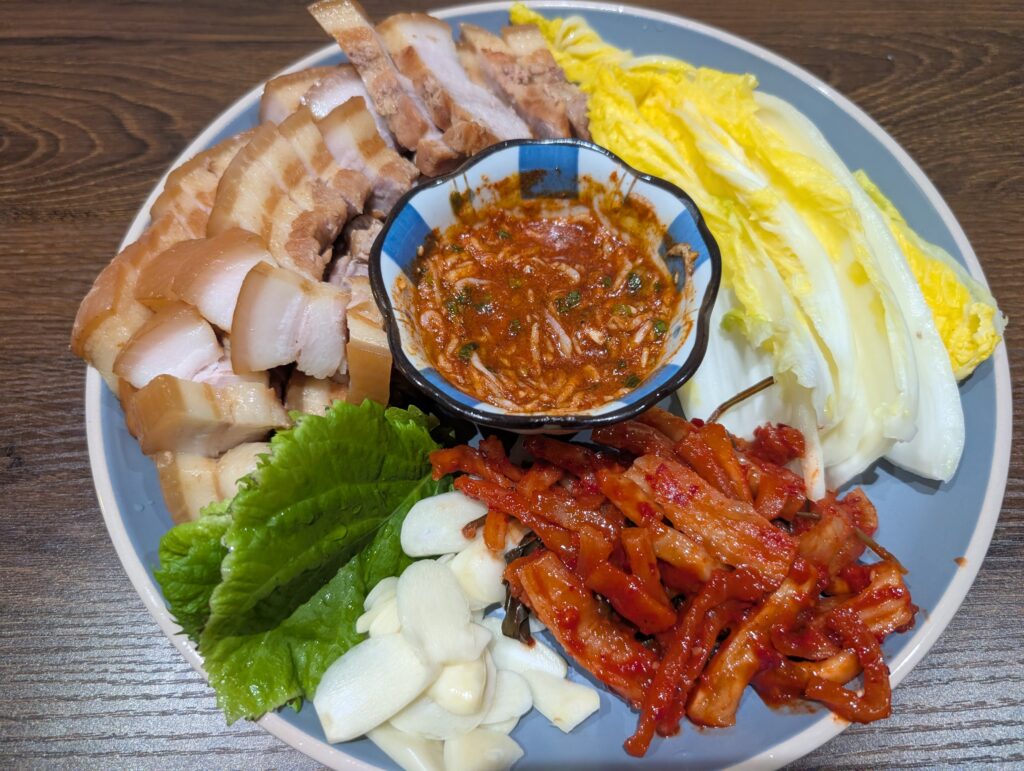
- Step 8: Assemble everything: sliced pork belly, steamed pickled cabbage, shiso leaves, radish kimchi, garlic, jalapeño, and shrimp sauce.

Ready to serve! Dip, wrap, and enjoy!
References
The one and only MaangChi’s recipe: https://www.maangchi.com/recipe/bo-ssam