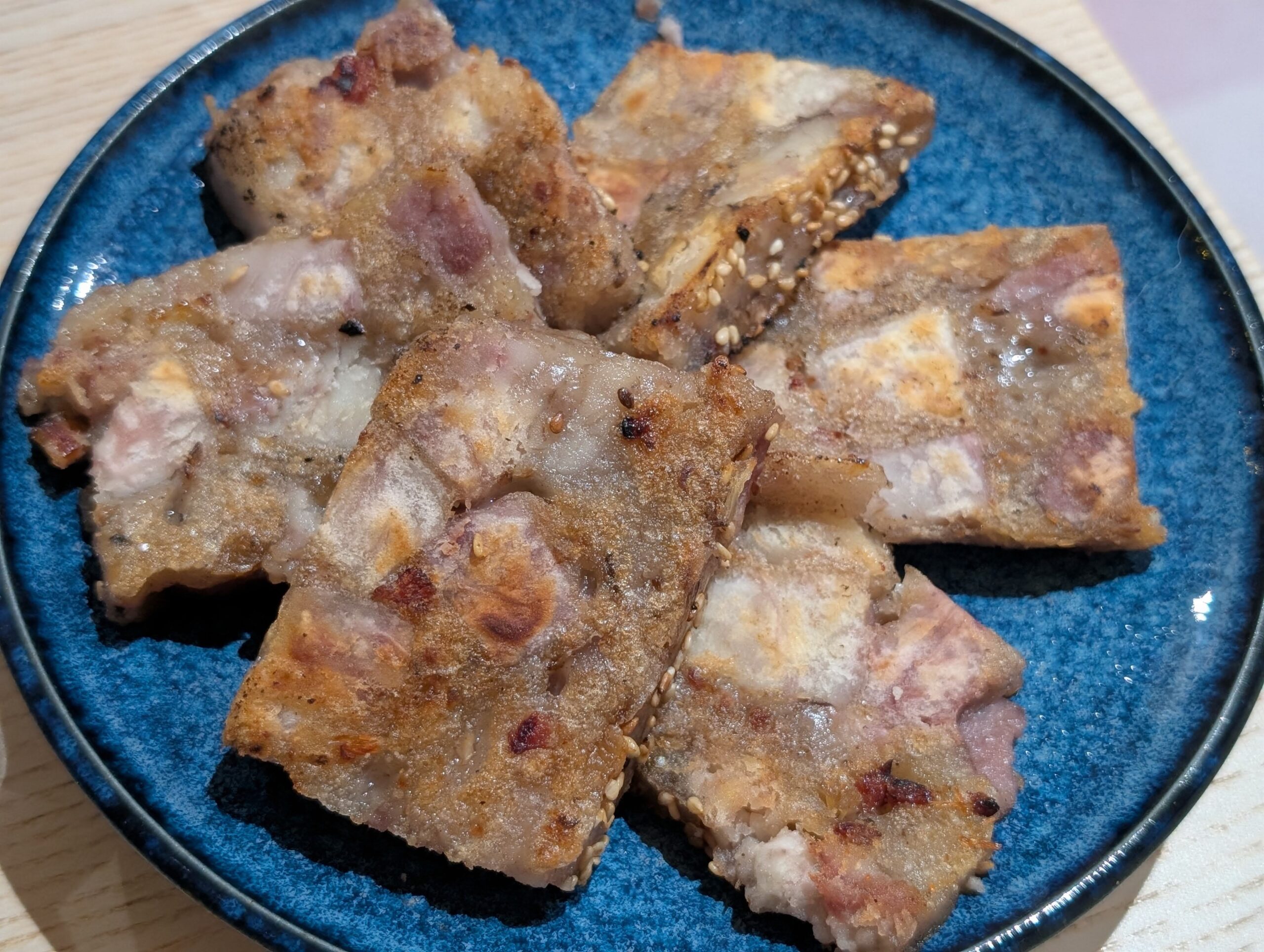
Other than Cantonese radish cake, I’ve always deeply missed taro cake. To be honest, I prefer radish cake slightly more. Restaurant taro cake can sometimes lack the taro taste, after all, it’s a very mild flavor, and a bit firmer, even slightly drier compared to the soft, savory radish cakes. So I want to see if I could make a taro cake that tastes better than the ones from the restaurants.
It turns out the recipe is very similar to radish cake, but taro pairs better with pork. Adding minced pork belly or extra Cantonese cured bacon really brings out the natural sweetness and earthiness of taro.
Now, making radish cake, taro cake, and glutinous rice has become almost a Chinese New Year tradition. If cured Chinese sausage and bacon from home weren’t so rare and hard to get, I would probably make these more often and gift them to friends!
Ingredients
Main Ingredients
- 1000 g taro (choose lighter ones with more purple veins—they’re usually sweeter)
- 70 g dried shrimp (蝦米)
- 70 g dried scallops (瑤柱)
- 70 g dried shiitake mushrooms (香菇)
- 70 g Cantonese sausage (臘腸)
- 70 g Cantonese bacon (臘肉)
- (optional) 200 g pork belly
Batter
- 200 g rice flour (粘米粉)
- 50 g wheat starch (澄粉)
- 250 g water (Use the soaking water from the dried seafood and mushrooms for extra flavor.)
Seasoning
- 1 tbsp oyster sauce
- 2 tsp salt
- 2 tsp sugar
- ½ tsp five-spice powder
- ½ tsp ground white pepper
- 1 tsp sesame oil
Instructions
- Step 1: Soak dried scallops, dried shrimp, and dried shiitake mushrooms in water for at least 1 hour. Reserve the soaking liquid.
- Step 2: Finely mince the soaked dried scallops, shrimps, and mushrooms. Dice the Cantonese sausage, bacon, and pork belly. (Tip: briefly steaming or boiling the sausage and bacon makes them easier to cut.)
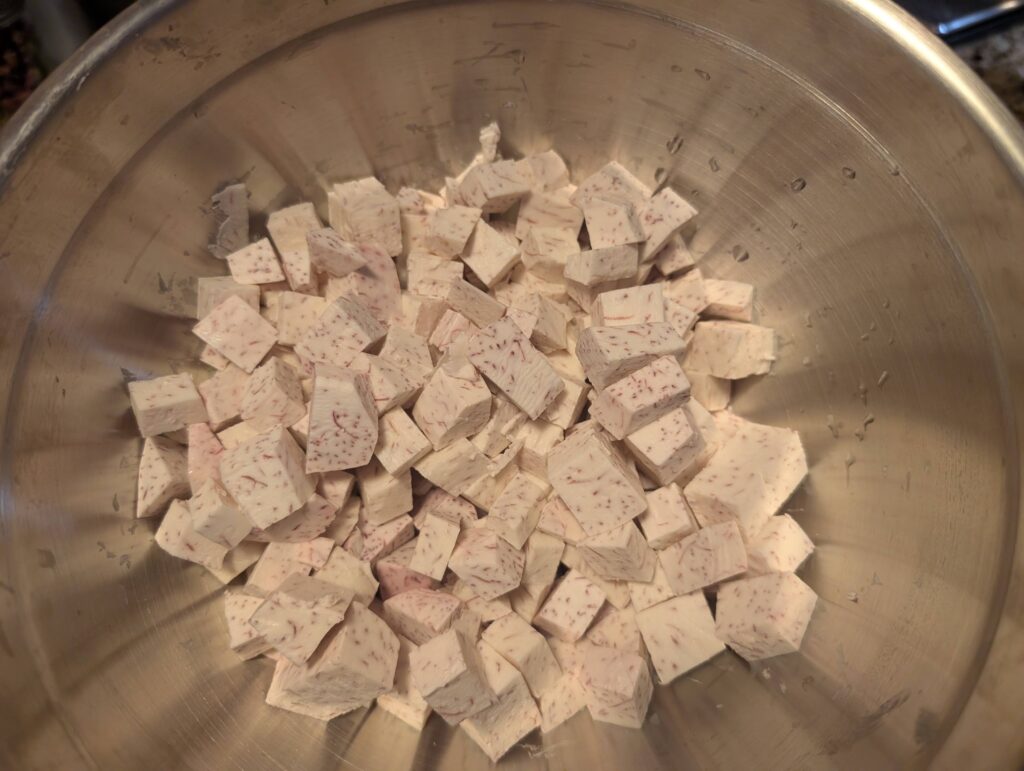
- Step 3: Wear gloves and peel the taro (it can irritate the skin). Cut into small cubes.
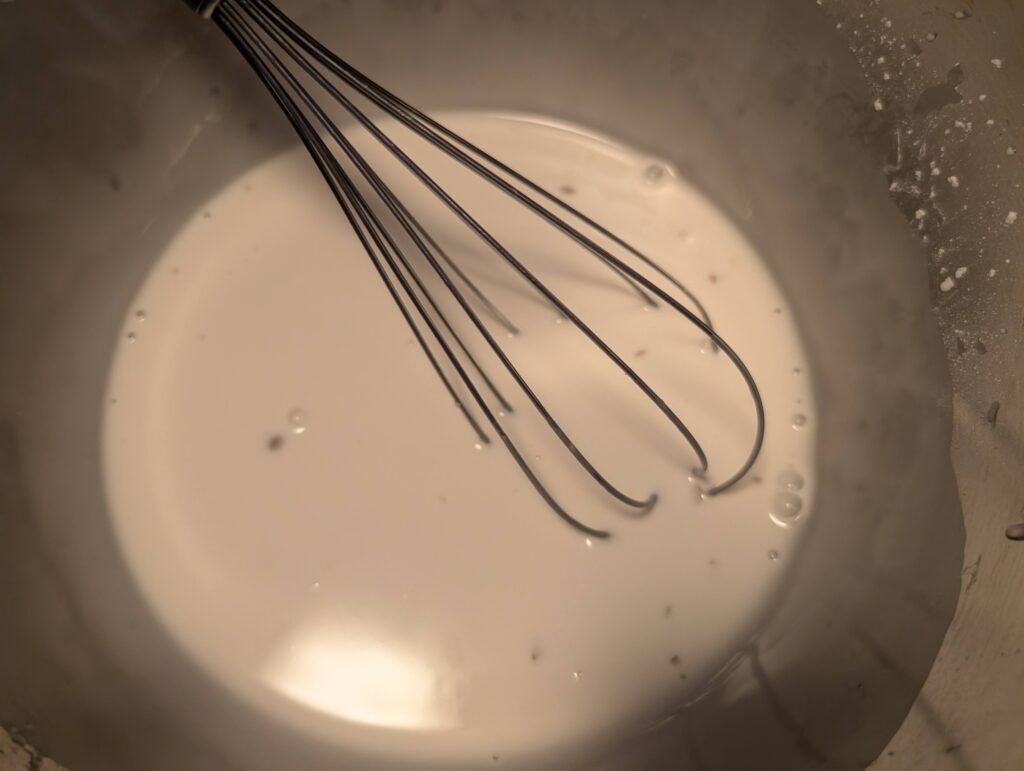
- Step 4: In a bowl, mix rice flour and wheat starch with 250 g water (including reserved soaking liquid). Stir until smooth with no lumps.
- Step 5: Heat a pan over medium heat. Stir-fry pork belly (if using) first. When the fat renders, add sausage and bacon. Once fragrant, add mushrooms, then dried shrimp and scallops. Stir-fry until aromatic. Remove everything from the pan, leaving any rendered oil behind.
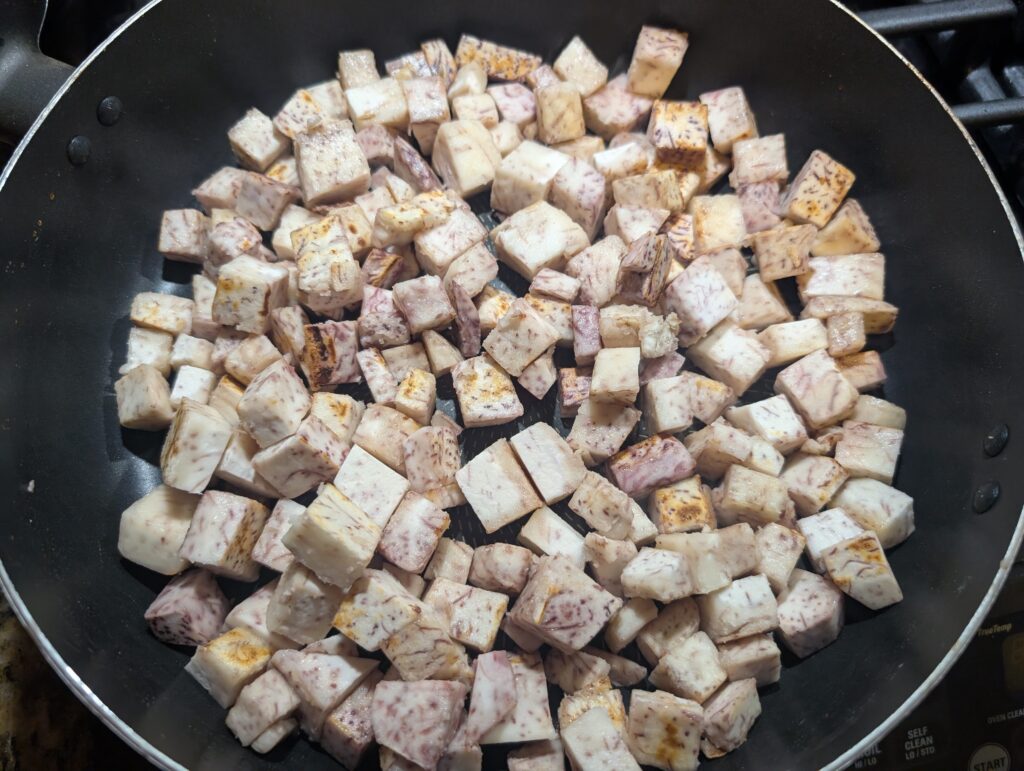
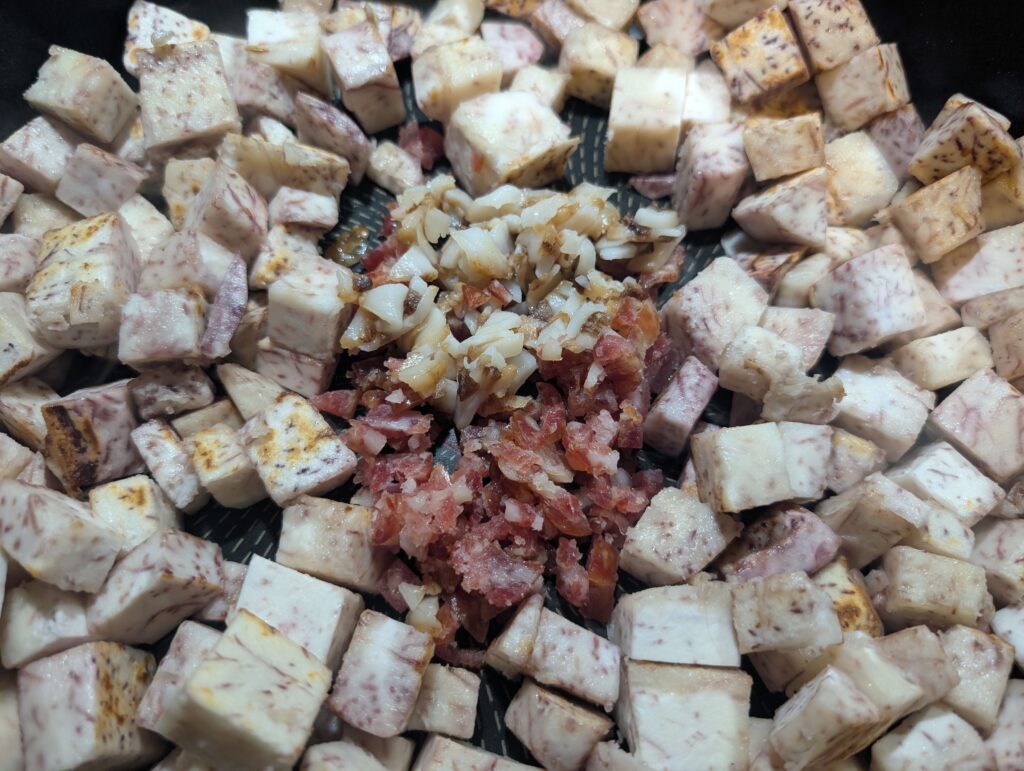
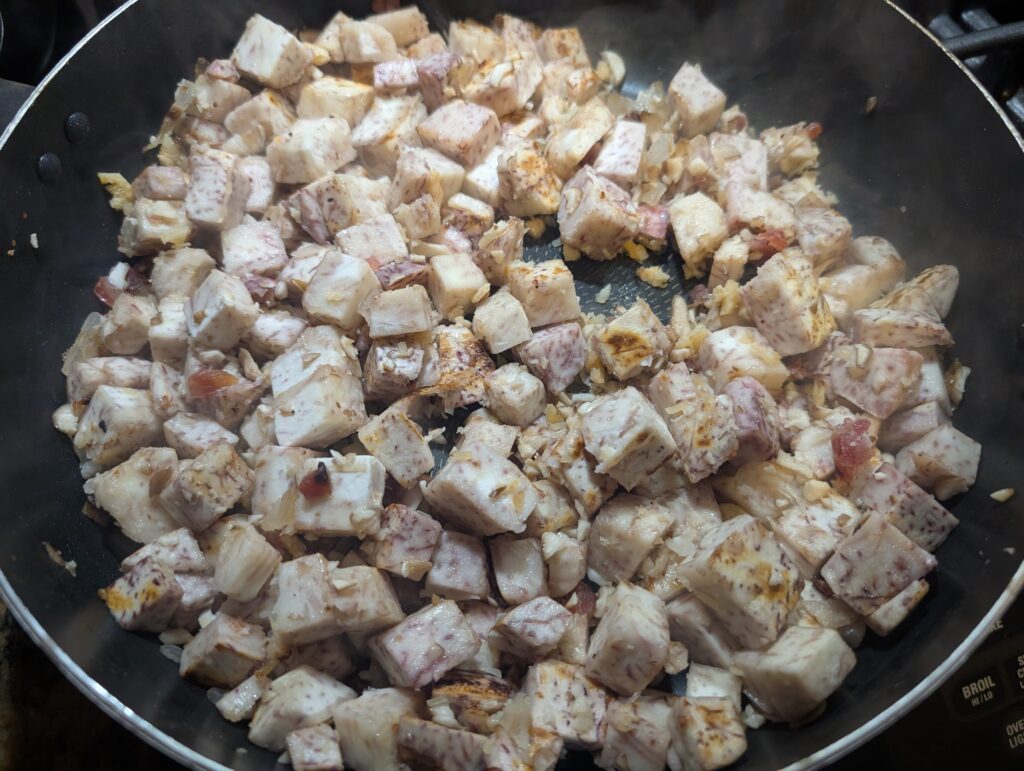
- Step 6: If needed, add a bit more oil. Stir-fry taro cubes over medium heat until the edges turn lightly golden. This helps the cubes keep their shape, diversifies texture, and prevents them from becoming overly mushy later.
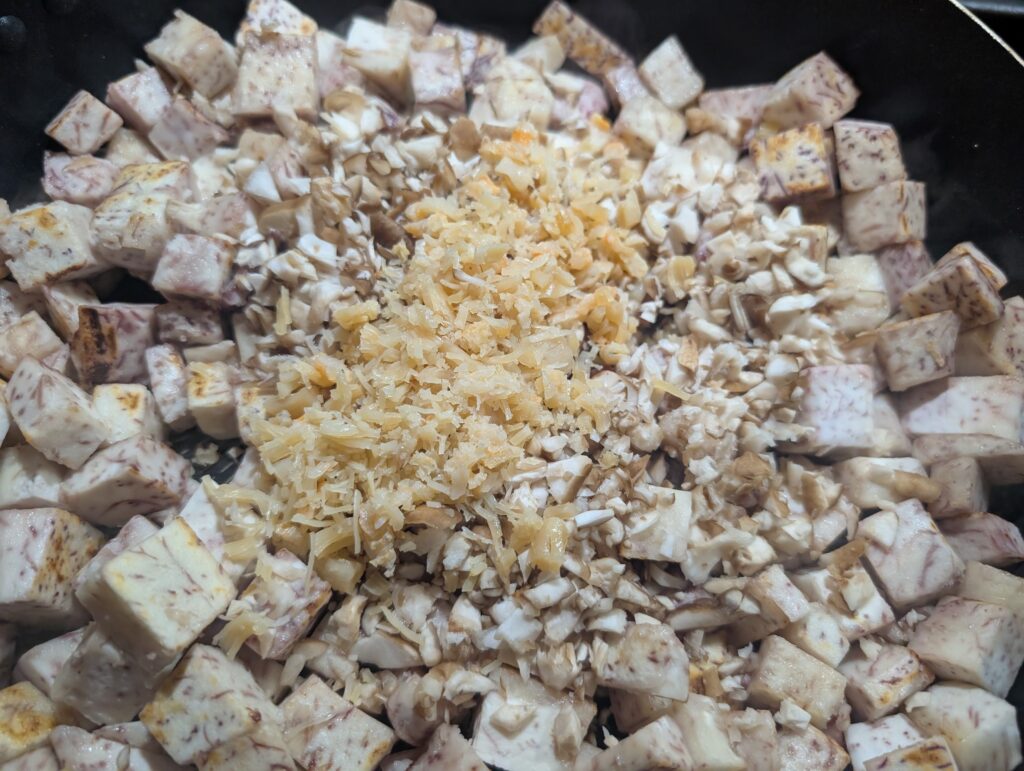
- Step 7: Reserve a small portion of the stir-fried meat and seafood mixture for topping later. Return the rest to the pan with the taro.
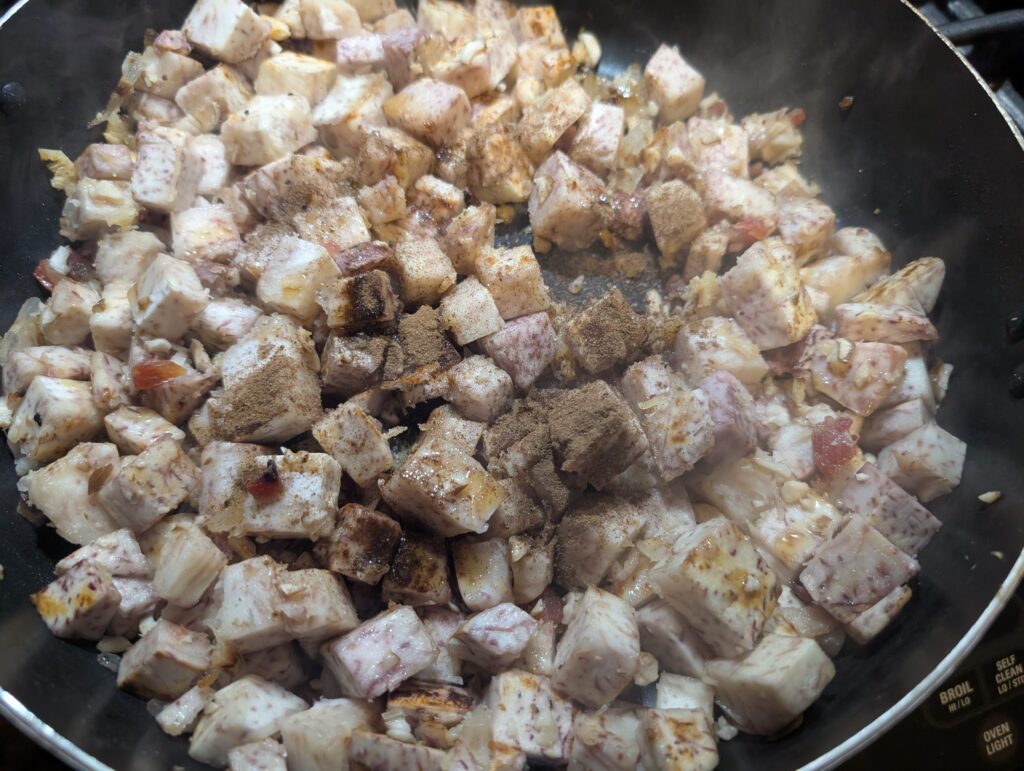
- Step 8: Season with 1tbsp oyster sauce, 2tsp salt, 2tsp sugar, 1/2tsp five-spice powder, 1/2tsp ground white pepper, and 1tsp sesame oil. Stir well to combine.
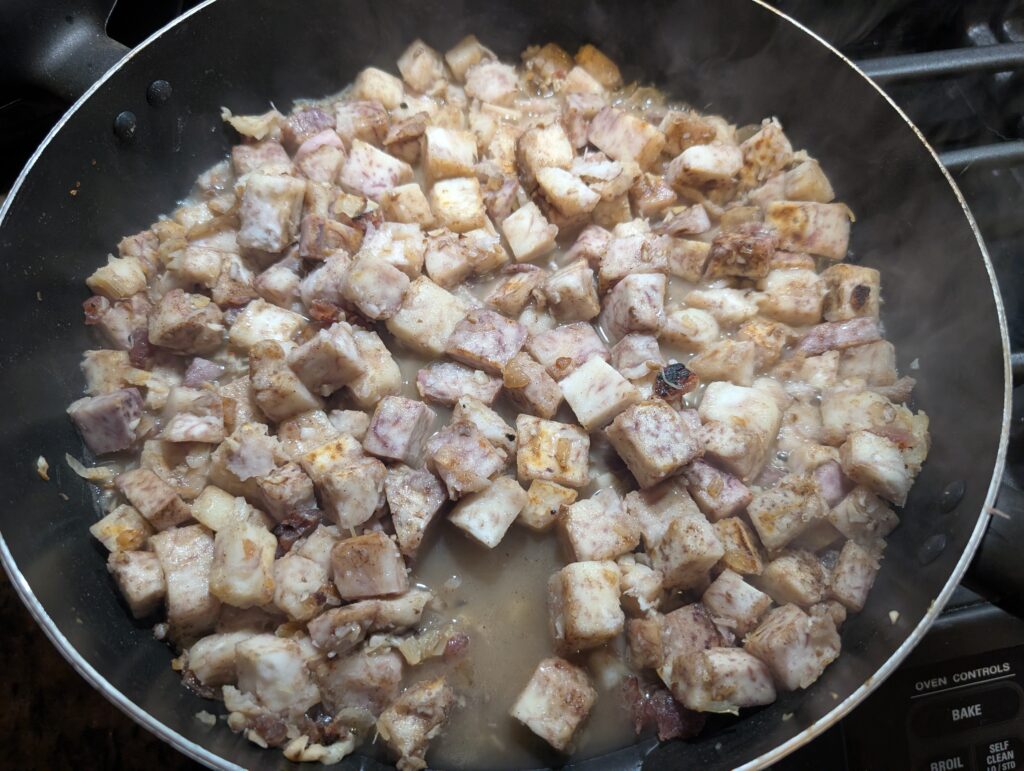
- Step 9: Add about 400 g hot water. Cover and cook for 1–2 minutes, until the edges of the taro cubes begin to soften.
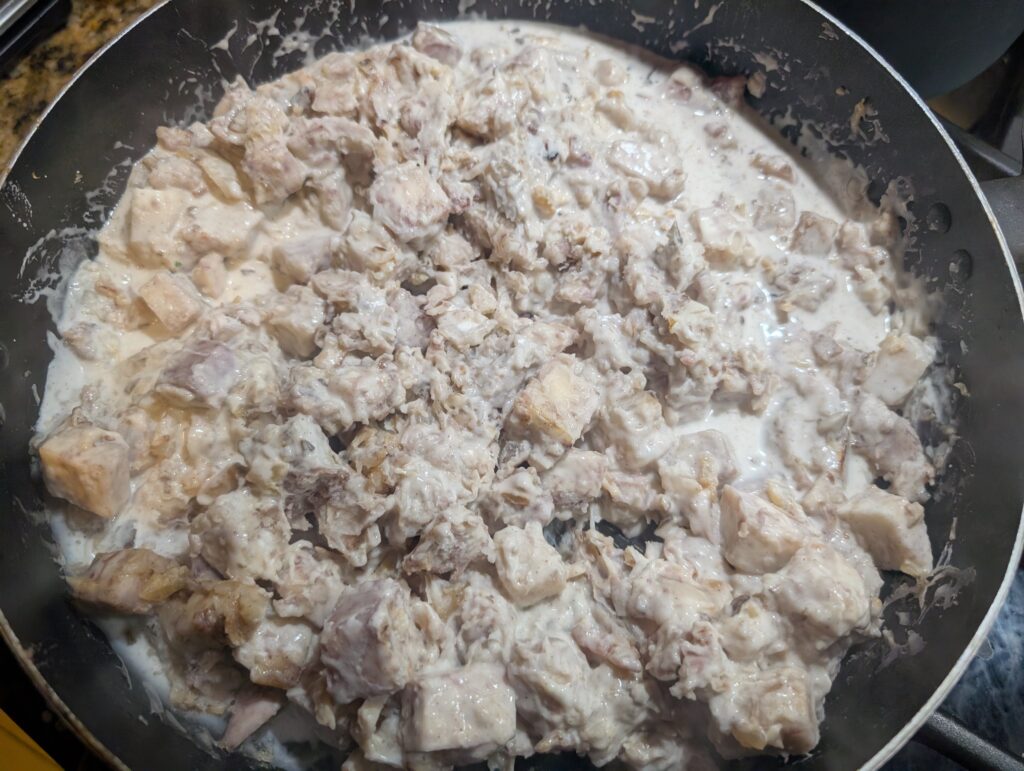
- Step 10: Turn off the heat. Pour in half of the batter mixture and stir well. Then add the remaining batter and mix until evenly combined.
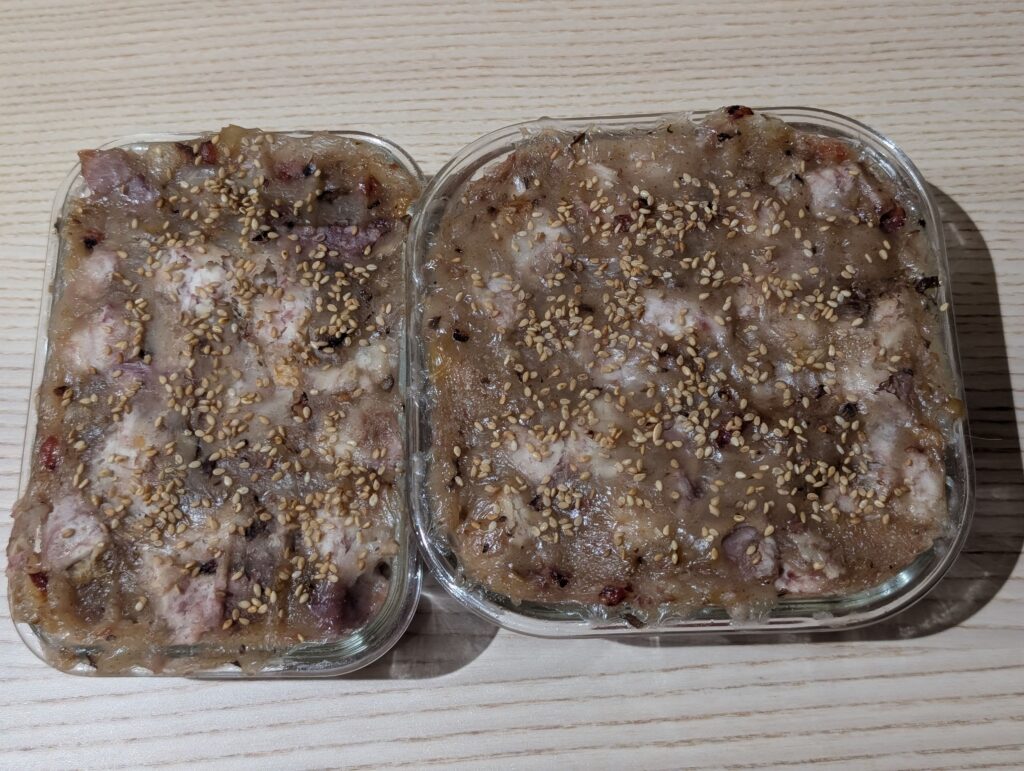
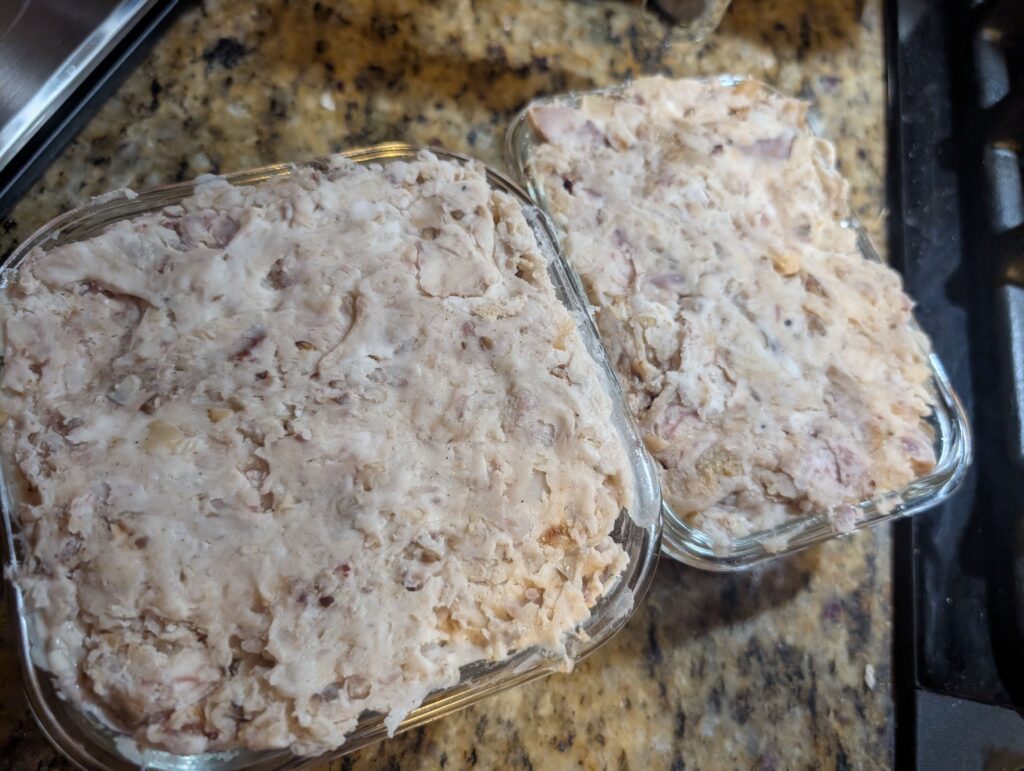
- Step 11: Lightly oil a steaming container or deep dish. Transfer the mixture in and press down firmly to remove air pockets. Sprinkle the reserved meat and seafood mixture on top, along with toasted white sesame seeds. Steam over boiling water for about 40 minutes.
- Step 12: Allow the taro cake to cool completely before unmolding, it will firm up as it cools. Slice and pan-fry over medium heat until both sides are golden and crispy. Avoid flipping too frequently, as the cake can break.
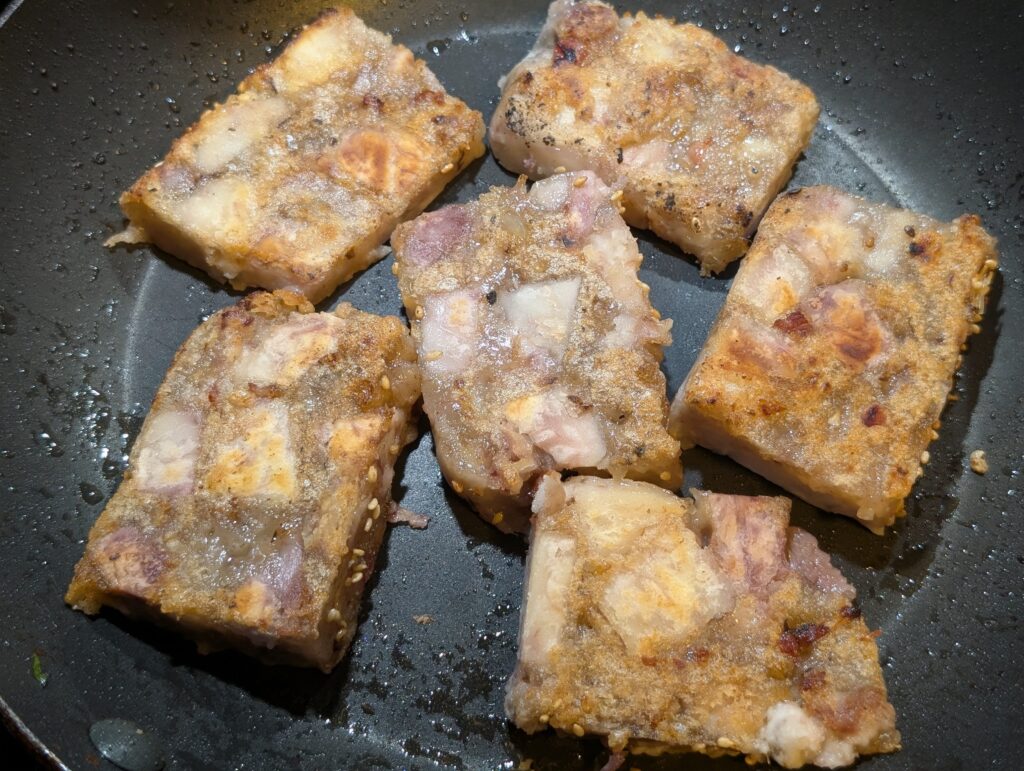
Crispy outside, soft and fragrant inside—this is the kind of taro cake that makes you reach for “just one more slice.”